
What Poetry Can Teach Us About Love, Money, and the Things That Last
While many are still recovering from their Christmas expenses, here comes February inviting everyone to talk about love in commercially familiar ways—flowers, chocolates, grand gestures, all worthy of Instagram posts. Indeed, this month of Feb-ibig has convinced many of us that affection is measured by how loudly it is expressed.
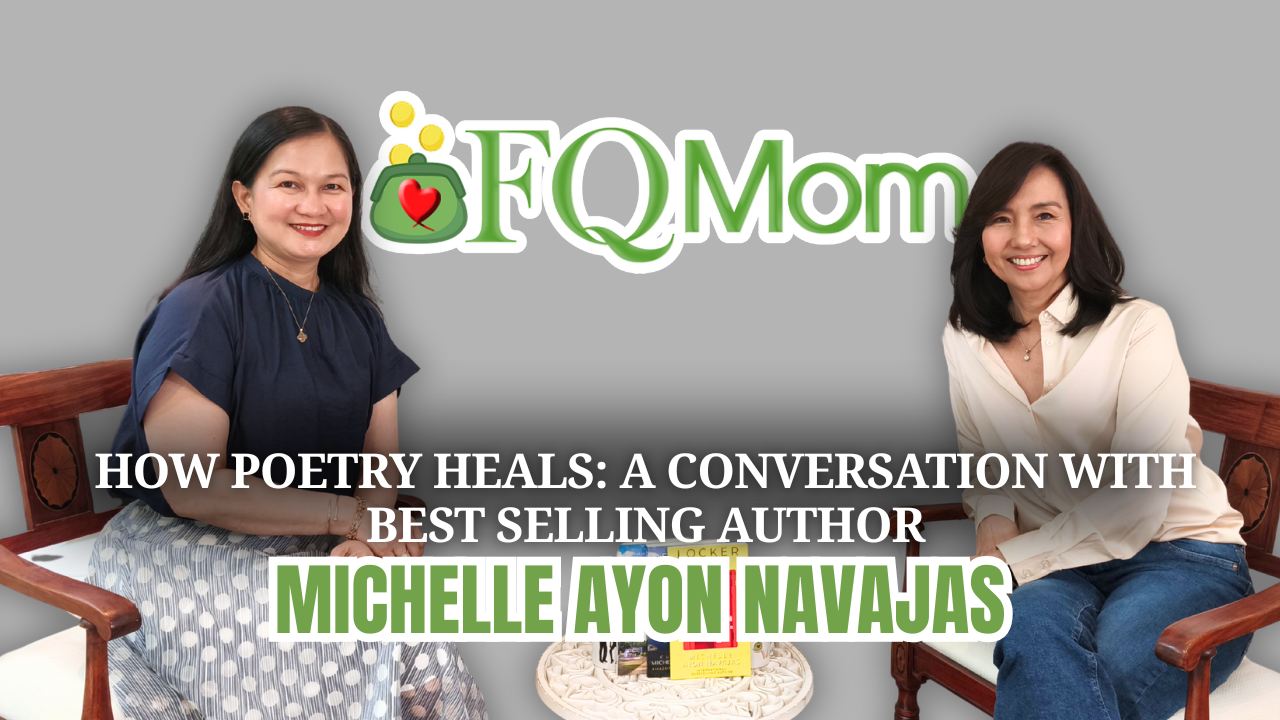
Recently, I spent a morning of conversation with Amazon bestselling poet and author Michelle Ayon Navajas on my podcast. It was so engaging that it continued over to lunch! We talked about poetry—why it endures, why it still matters in a world obsessed with speed, productivity, and instant results. What struck me most was how much discipline poetry actually requires. Nothing in a good poem is accidental. Every word earns its place. Every line carries intention.
Listening to her, I realized that poetry and FQ have more in common than we might think.
We often imagine poetry as purely involving our Emotional Emong and finance as cold calculation by our Makatwirang Mak. But real poetry is not indulgent. It is restrained. It chooses what to include—and what to leave out. The same is true of sound financial decisions. Financial Intelligence is not so much about having more money. It is about giving meaning to the money we already have.
Poetry values clarity. It asks, What is essential?
So does FQ.
In relationships, especially romantic ones, this question matters deeply. Valentine’s Day can tempt us into believing that love must be proven in a single day, a single purchase, or a single grand surprise. Yet poetry reminds us that love is rarely sustained by spectacle. It is sustained by attention, consistency, and truth.
The love that lasts is often quiet.
Financially, this quiet love shows up in unromantic, unexciting ways: building an emergency fund, getting insurance, automating saving and investing, planning for retirement, talking honestly about money with a spouse, resisting lifestyle inflation. These actions don’t photograph well. They don’t trend on social media. But they protect the future of the people we love.
In my conversation with Michelle, we touched on how poetry survives because it respects time. A poem does not rush. It allows meaning to unfold slowly. Financial Intelligence works the same way. It trusts compounding. It honors patience. It understands that the most important results are rarely immediate.
This is particularly relevant in a culture where spending is often confused with caring. We are told—subtly and sometimes not so subtly—that love is proven by how much we spend. But spending is easy. Planning is harder. And commitment is hardest of all.
Yet love, at its core, is about commitment.
To choose to plan together—to align values, to make sacrifices, to think not just of today but of decades ahead—is one of the most profound expressions of love there is. It says, I care not only about how you feel now, but about who we will become together.
Poetry teaches us that meaning is not created by excess, but by intention. Financial Intelligence teaches us the same lesson. Both ask us to slow down. Both require honesty. Both reward those who think beyond the moment.
Perhaps that is why poetry continues to resonate, even in an age of algorithms and automation. It reminds us of what it means to be human—to choose carefully, to love deeply, and to invest in what truly matters.
Let me share a bit of my love story. My husband and I have been married for 36 years now. While we’ve always been fans of romantic gestures since we started dating, we made it a point—perhaps not consciously at first but rooted in common upbringing and shared values—not to break the third basic law of money.
Today, as empty nester seniors who did not break the momentum of the power of compounding, we are able to enjoy our Third Act with greater freedom. And this makes it easier for us to look into each other’s eyes—wrinkles and all—and say, “I love you dearly, you’re still my favorite person in the world!” as we sing to our theme song, More Today Than Yesterday, finding its meaning stronger now than ever before!
So, here’s my word of advice for young couples. This Valentine season, as you plan your celebration, remember to temper it down to what is kind to your still-juvenile net worth. There is really no need to compete through Instagram posts of grand displays. Love is not a performance—it is a practice.
Just like the most beautiful poems, your best expressions of love don’t shout. Neither do the best financial decisions.
Cheers to a High FQ Valentine to all of you!
ANNOUNCEMENTS
1. Watch out for my Podcast Interview with Amazon best-selling author, Michelle Ayon Navajas on FQ Mom YouTube and podcast channels.
2. Real love isn’t a grand performance—it’s the quiet discipline of planning for a future together. Take the FQ Test to see if your financial habits are truly protecting the ones you love. Click here.

3. Stop measuring affection by how much you spend and start measuring it by the commitment you keep. The Financial Quotient (FQ) books teach you the discipline of “financial poetry,” helping you give true meaning to your money and your relationships. Get your copy here.

This article is also published in Philstar.com
